Fuel, servicing and rides in one logbook. Photograph the pump and RideBook reads the numbers. Set your own service intervals and it counts down by distance, not just by date. Everything stays on your phone.
Android · free during testing · no account, no sign-up
Every logbook app asks you to type the same numbers over and over, then shows you a total you cannot act on. RideBook tries to do the opposite.
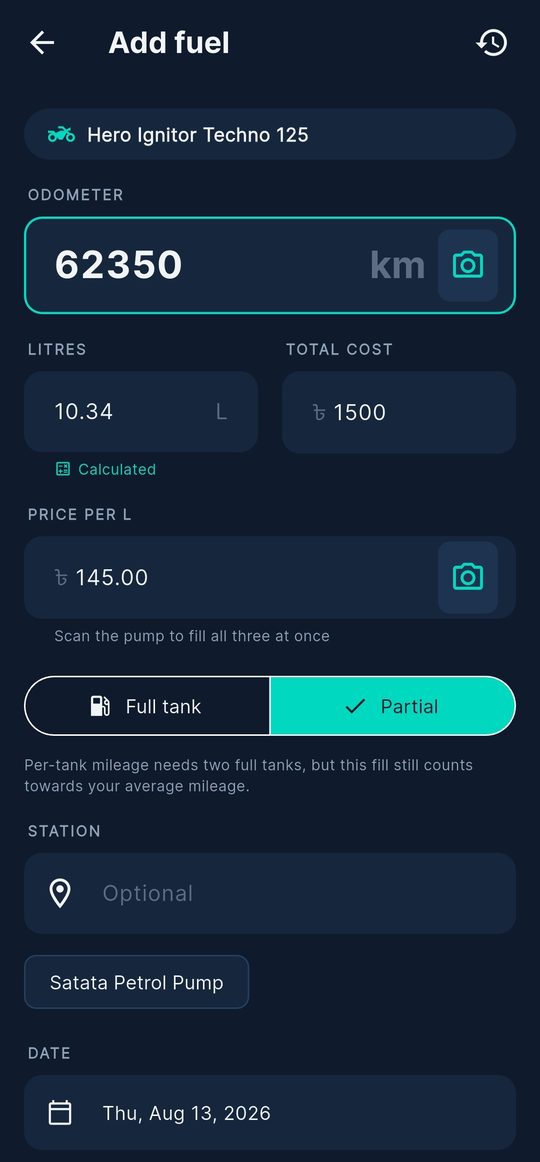
Point the camera at the pump display and the odometer. RideBook reads litres, price and total, and checks they multiply up. Enter any two by hand and it works out the third.
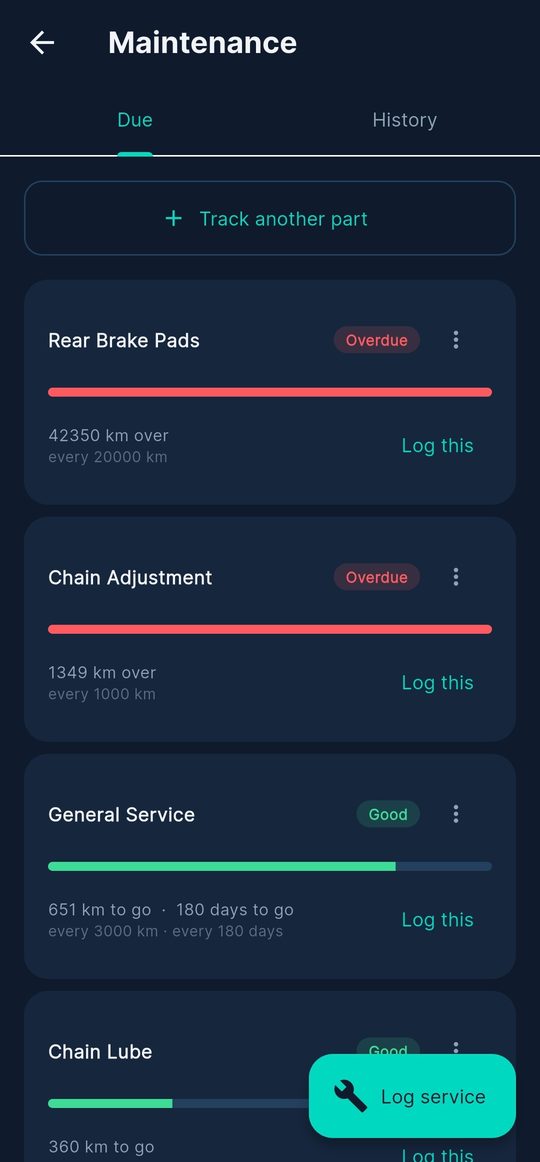
Eighty-five parts, filtered to what your vehicle actually has — no chain on a car. Change every interval; some riders change oil at 1,000 km, others at 4,000, and both are right.
Fuel plus servicing, divided by distance actually covered. With more than one vehicle you get them side by side, so you can see which one is quietly expensive.
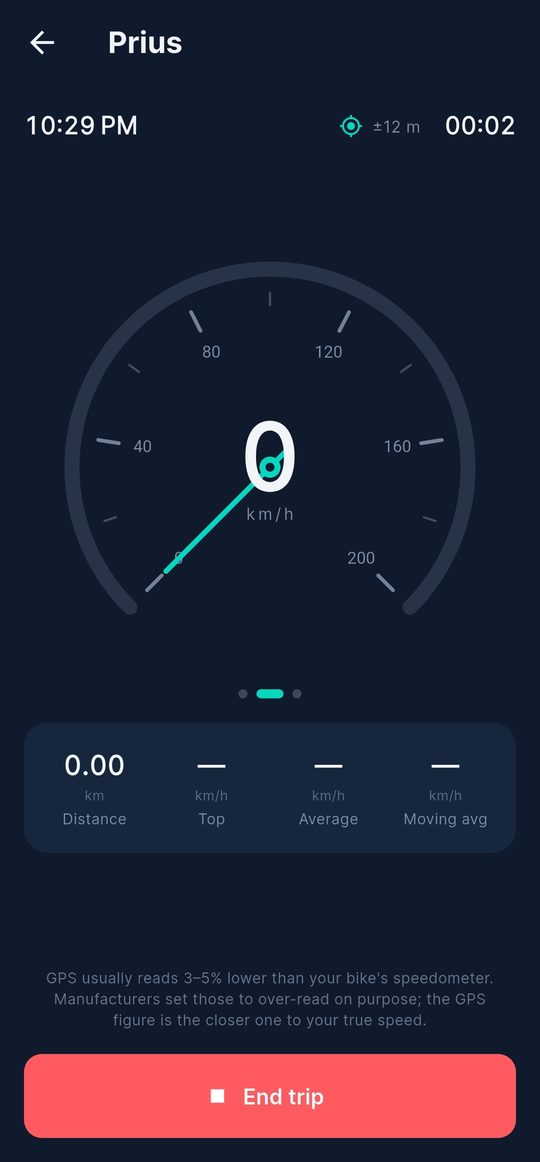
Three faces — digital, analog dial, minimal arc. Records distance, time and top speed, and keeps recording with the screen off. Colours follow the actual sunrise where you are.
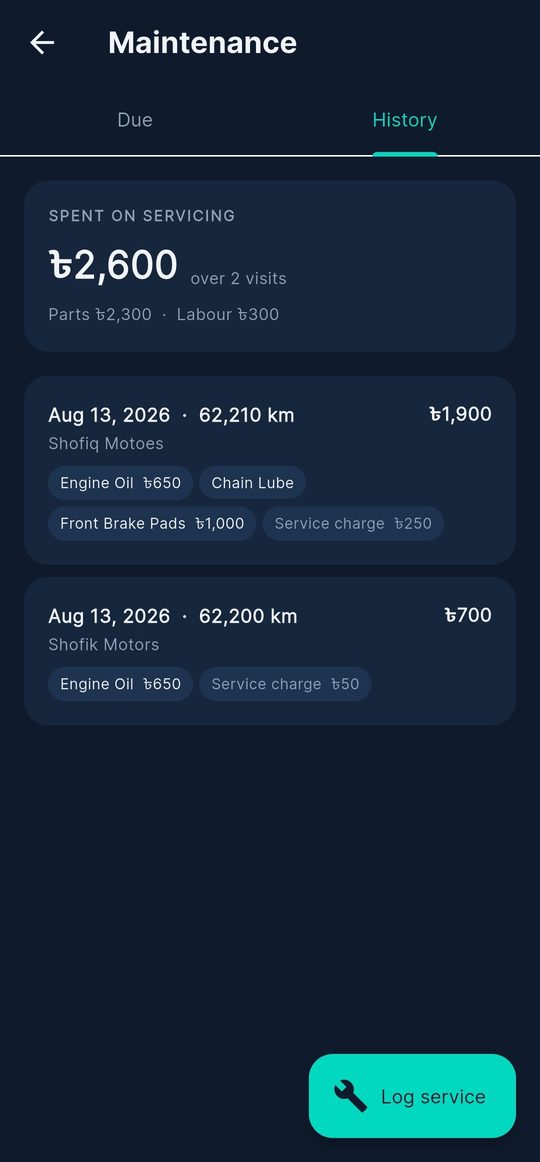
A real service replaces several things on one bill. Log them all in a single entry — each part priced separately, labour charged once, exactly how the workshop writes it.
Name the station when you fill up and RideBook compares the mileage each one actually gave you. It says when the sample is still too small to mean anything.
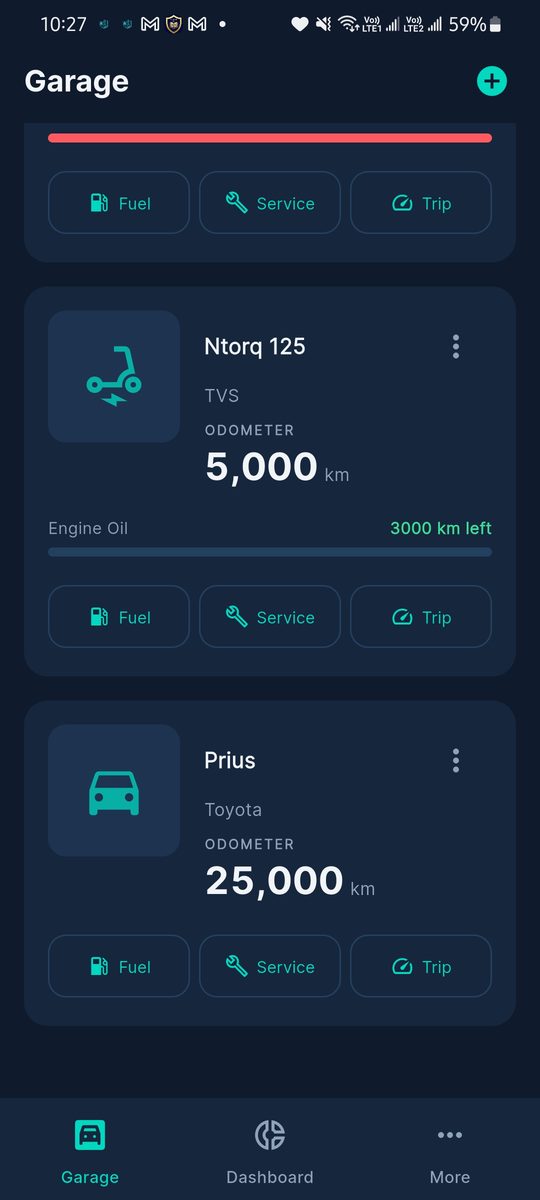
Fuel, service and trip on every vehicle card, with the most urgent reminder right there on it.
Standing in the sun with one hand free is the real test of a logbook. This screen was built for that.
Service costs arrive in small bills months apart, so everyone underestimates them. Adding them up changes how you plan.
Pocket the phone, lock the screen — the trip carries on recording, with a notification so you always know it is running.
Most of these are things other apps quietly get wrong. We would rather tell you up front.
Usually by 3–5%, and your bike is the one exaggerating — manufacturers set speedometers to over-read on purpose. The app says so on the screen rather than letting you assume it is broken.
That needs live map data. So the speed reminder is a number you set yourself, it is off by default, and it is never called a limit.
There is no way around that: with a partial fill nobody knows how much was burned. So you get both figures — the precise per-tank one when it is available, and a lifetime average that works either way, each clearly labelled.
GPS is used in memory to work out speed and distance. A trip saves numbers — distance, time, speed — and no route, no coordinates. There is no server to send them to.
No free, complete vehicle dataset exists. Over 350 models are bundled, and if yours is missing you type it in — which takes about five seconds and works forever after.
RideBook is in closed testing on Google Play. Testers get it free, and what you ask for genuinely decides what gets built next — several features on this page started as somebody's message.
You will need a Google account and an Android phone. We will send you the opt-in link.
 RideBook